
Understanding the True Cost: Maintenance Costs of Owning a Used Car vs. a New Car
When you’re deciding whether to buy a new car or purchasing a used car, understanding the true cost of owning matters more than the sticker price. This post examines maintenance costs, repair risks, insurance, and the total cost of ownership so you can confidently weigh owning a used vehicle versus a new vehicle. Whether you’re focused on upfront costs or long-term costs, these insights help you find a car that fits your budget and lifestyle.
1. What is the true cost of owning a used car compared to a new car?
Understanding the true cost of owning means looking beyond purchase price to factors like routine maintenance, unexpected repairs, insurance costs, and fuel costs. A used car typically has lower upfront costs and slower initial depreciation, reducing the cost of owning in the short term. However, older cars may require more frequent repair and replacement parts, raising ongoing cost over time.
New cars often come with warranties and lower maintenance needs in the first few years, which can lower immediate repair costs and give predictable car maintenance schedules. To calculate the total cost of ownership, add purchase price, insurance, fuel, routine maintenance, and estimated repair costs over the period you plan to own the vehicle.
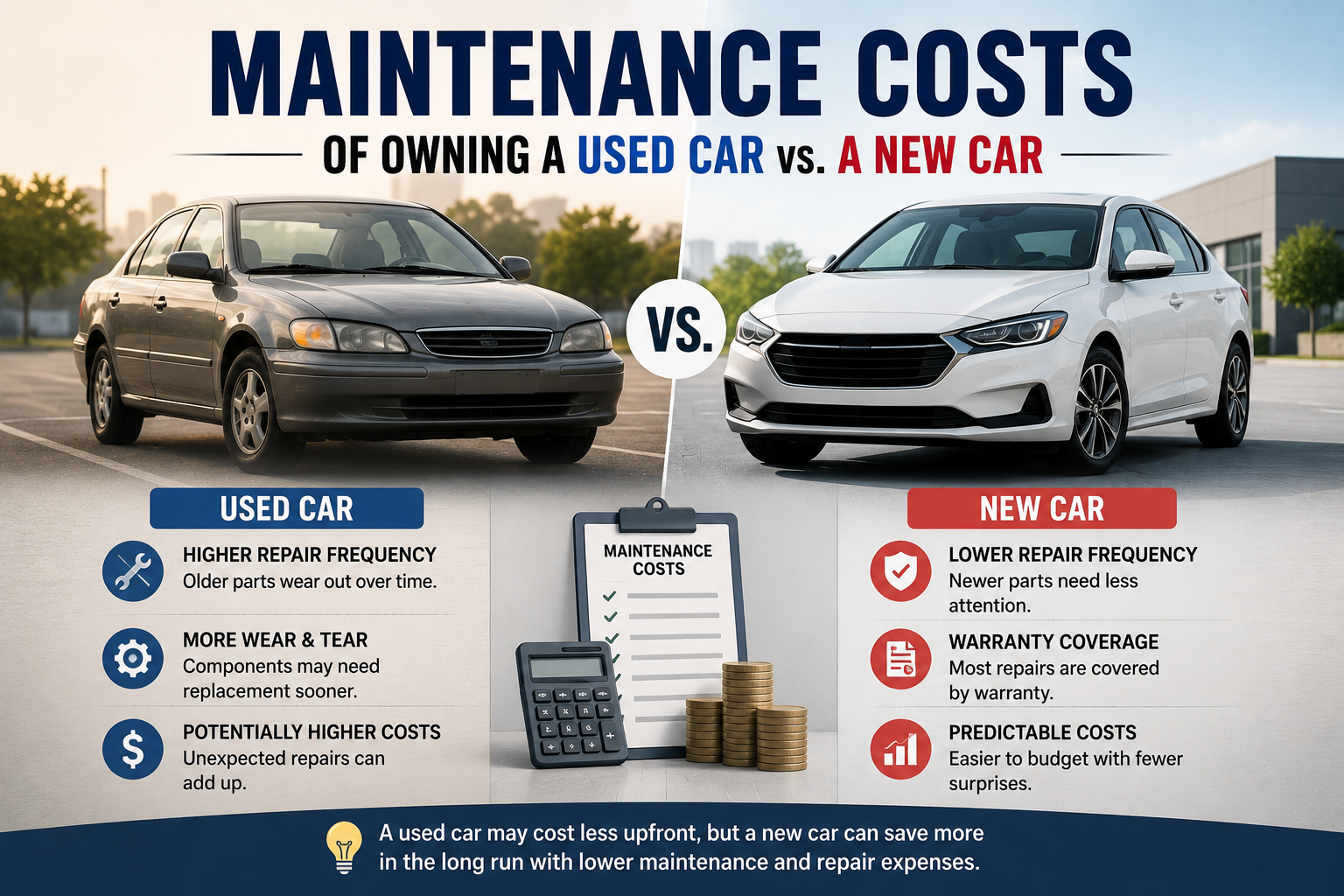
2. How do repair costs differ between used vehicle and new vehicles?
Repair costs for used cars tend to be higher and less predictable because older cars may have worn components and out-of-warranty systems. Repair costs can spike for major components like transmissions or engines, especially if regular maintenance was neglected by prior owners. Buying certified pre-owned or getting a pre-purchase inspection can reduce the risk of unexpected repairs.
New vehicles usually experience lower repair costs initially because factory warranties cover many repair items and new cars often come with maintenance packages. However, repair costs increase after warranties expire, and some new vehicles with advanced technology can be costly to fix when repair needs arise.
3. How do maintenance costs impact the total cost of ownership for car ownership?
Maintenance costs are a major component of the total cost of ownership. Regular maintenance—oil changes, brake pads, tires, and scheduled inspections—helps prevent expensive repairs and supports the car’s resale value. Owning a used car typically requires more frequent maintenance checks, and older cars may need parts replaced sooner.
For new cars, manufacturer-recommended routine maintenance is often less intensive during the warranty period, reducing short-term maintenance costs. Still, long-term costs of owning a new car include scheduled major services and potential higher costs for OEM parts when the car ages.
4. Will insurance costs change if I buy a used car or buy a new car?
Insurance costs vary by vehicle, age, safety features, and value. Generally, owning a used car leads to lower insurance costs because replacement costs for used vehicles are lower. New cars often carry higher premiums due to higher replacement values and more advanced, expensive-to-repair systems.
Factors like lower insurance costs for certain models, safety features, anti-theft devices, and your driving record influence your policy. Comparing quotes for both new and used options is essential when calculating the full cost of car ownership and deciding whether to buy a new car or a used one.
5. How much does depreciation affect the cost of owning a new vs used car?
Depreciation is one of the biggest hidden costs of owning a car. New cars often suffer the steepest depreciation in the first few years — potentially losing 20–30% of their value within the first year — which dramatically impacts the total cost of ownership. Buying a used car usually results in less steep depreciation since the original owner absorbed the largest drop.
The true cost of owning takes depreciation into account because it affects resale value and overall car cost across ownership time. If minimizing long-term costs is your goal, buying a slightly used vehicle or certified pre-owned can balance lower purchase price with reasonable maintenance needs.
6. What routine maintenance should I expect for used cars and new cars?
Routine maintenance for any vehicle typically includes oil changes, filter replacements, tire rotation and replacement, brake inspection, fluid top-ups, and scheduled services per the maintenance schedule. Older cars may require more frequent attention to suspension components, belts, and hoses, while new cars benefit from recent replacements and manufacturer care programs.
Keeping up with regular maintenance reduces repair costs and helps avoid unexpected repairs that older cars may face. Documented maintenance history when buying used can also lower the risk of future problems and influence long-term ownership costs.
7. How do unexpected repairs affect the maintenance costs of owning a used car vs. a new car?
Unexpected repairs can dramatically change the cost of owning a used car. Older cars may have hidden issues that surface after purchase, creating spikes in repair costs. A pre-purchase inspection and budgeting for a repair reserve can mitigate the financial shock of sudden failures.
New cars are less likely to need major repairs early on thanks to warranties, but once the warranty expires, repair costs can rise and sometimes be higher than for simpler older cars. Comparing repair trends for specific models and considering extended warranties are ways to manage long-term repair costs.
8. Is the cost of car ownership lower for a new car or a used one in the long term?
Long-term costs depend on how long you plan to own the vehicle, maintenance habits, and the model’s reliability. Owning a used car can be less expensive overall if you buy a reliable used vehicle, maintain it diligently, and avoid high-mileage purchases with unknown histories. The lower purchase price and slower depreciation often make the total cost of ownership attractive.
Conversely, owning a new car can offer lower maintenance costs early on and fewer unexpected repairs, which some drivers prefer for predictable car ownership. Calculate total lifecycle costs—including insurance, fuel costs, and repair costs—to determine which option aligns with your budget and priorities.
9. What role does purchasing a used or new car play in ongoing cost and ownership costs?
The choice to buy a used or buy a new car sets the tone for ongoing costs. Purchasing a used car often reduces upfront costs and initial depreciation, but it can increase the probability of repair costs and higher routine maintenance. Researching vehicle history, service records, and model reliability can lower long-term ownership costs.
Buying new increases upfront costs and initial depreciation, but new cars often include manufacturer incentives, warranties, and lower maintenance costs in the early years. Look at the true cost of ownership over the period you plan to keep the vehicle to decide which purchase aligns with your financial goals.
10. How can I minimize maintenance costs whether I buy a new car or a used one?
You can reduce ownership costs through preventive maintenance, thorough inspections before purchase, and selecting reliable models with lower repair costs. Regular maintenance, using quality parts, and choosing vehicles with good reliability ratings help lower both routine and unexpected repair costs. Consider Certified Pre-Owned options to combine lower purchase price with warranty protection.
Other strategies include comparing insurance costs for different models, keeping your mileage reasonable, and following the maintenance schedule recommended by manufacturers. Budgeting for ongoing cost and building a repair fund can ease the financial burden of owning a car—new or used.
11. What should I look for when buying a used car to avoid high maintenance costs?
When buying used, inspect service records, look for signs of consistent regular maintenance, check for accident history, and have a trusted mechanic perform a pre-purchase inspection. Older cars may have deferred maintenance or hidden issues that will increase future repair costs, so verifying the vehicle’s maintenance schedule and condition is crucial.
Consider market data on the cost of ownership for specific used models, focusing on reliability and parts availability. Choosing popular models with lower repair costs and lower insurance costs can reduce the total cost of ownership and make your used car purchase a smarter financial decision.
12. Are there cost benefits to buying a certified pre-owned used vehicle?
Certified pre-owned (CPO) vehicles balance lower purchase price with assurances like extended warranties, inspection, and sometimes included maintenance plans. CPO vehicles can narrow the gap between new and used maintenance costs because they often come with limited repair coverage and a documented maintenance history.
While CPO cars can cost more than typical used cars, the reduced risk of unexpected repairs and predictable ownership costs can make the total cost of ownership lower in practice. For buyers prioritizing certainty and lower repair risk, CPO can be an appealing middle ground between new and used.
13. How do fuel and other ownership costs compare for new and used cars?
Fuel costs and other day-to-day expenses contribute to the cost of car ownership. New vehicles often have improved fuel efficiency and modern engine technology that reduce fuel costs compared to older cars. However, many late-model used cars also offer good fuel economy, narrowing this advantage.
Other ownership costs—like registration, taxes, and emissions testing—vary by state and vehicle age. Older cars may face higher costs if they fail inspections or require emission-related repairs, so factor these into the true cost of used car ownership.
14. Should I buy a new or used vehicle to meet my budget and long-term goals?
Your decision to buy a new or used vehicle should be grounded in an honest assessment of your budget, risk tolerance for repairs, and how long you plan to keep the car. If you prioritize lower upfront cost and slower depreciation, buying used is attractive. If you prefer lower early maintenance and predictable costs, buying a new car may be best.
Consider financing rates, insurance costs, and expected maintenance costs for the specific models you’re evaluating. A side-by-side comparison of total cost of ownership over your planned ownership horizon will reveal the more economical path for your situation.
15. What are the real-world examples of cost differences between new and used cars?
Real-world comparisons often show that a three-year-old used car can cost significantly less to buy and still have comparable maintenance costs to a new car out of warranty. For example, a used one with documented service records may have lower monthly cost of owning due to reduced loan payments and slower depreciation.
On the other hand, a new car might save you money on early repair costs and lower insurance if it has strong safety ratings. Use model-specific cost-of-ownership calculators and historical repair cost data to compare the true cost of owning various new and used vehicles.
16. How does the maintenance schedule influence the ongoing cost of car ownership?
Following the manufacturer’s maintenance schedule is one of the most effective ways to control long-term maintenance costs. Regular services prevent small issues from becoming expensive repairs and preserve the car’s value. For used cars, verifying adherence to the recommended maintenance schedule can predict future repair needs and ownership costs.
New cars come with clear maintenance intervals and often include initial service plans, which smooth out early ownership costs. Regardless of new or used, establishing a maintenance routine and keeping records will minimize unexpected expenses and support higher resale value.
17. What financing and warranty options help reduce maintenance costs after a used car purchase?
Financing terms and warranties affect the total cost of ownership. Lower interest rates reduce monthly car cost, and extended warranties or service plans can cap repair costs for used vehicles. Many lenders and dealers offer extended warranties or certified pre-owned programs that provide some protection against expensive repairs.
When considering warranties, weigh the cost of the warranty against expected repair costs for your chosen model. For older cars with higher repair risks, extended coverage might be a wise investment to manage the ongoing cost of ownership.
18. How can I estimate the average cost of owning a new vs used car over five years?
To estimate average cost over five years, calculate the purchase price minus expected resale value (depreciation), add insurance, fuel, regular maintenance, and projected repair costs. Tools like total cost of ownership calculators and model reliability reports help produce realistic estimates. Remember that buying used reduces depreciation but may increase repair probabilities.
Make separate estimates for new and used scenarios using the same ownership timeline. Compare totals to pinpoint whether lower upfront costs or lower early maintenance better align with your financial goals and practical needs.
19. What are the top tips to lower car maintenance costs regardless of new or used?
Top tips include following the maintenance schedule, using quality replacement parts, keeping tires properly inflated, and addressing small issues early to avoid costly repairs. Shopping around for service and parts, maintaining a repair fund, and choosing models with low repair costs will reduce the full cost of owning a vehicle.
Also, consider joining owner forums and researching common failures for the car you’re considering. Proactive care and informed purchasing reduce the likelihood of unexpected repairs and lower the lifetime cost of vehicle ownership.
20. How does choosing the right model impact the total cost of ownership?
Model selection significantly affects maintenance and repair costs because reliability, parts availability, and known mechanical issues differ across makes and models. Researching the true cost of ownership for specific models helps you avoid cars with high repair costs and expensive parts.
Opt for vehicles with strong reliability ratings, lower insurance costs, and accessible service networks. These choices make owning a car—new or used—more affordable over time and help you meet long-term budget goals.
Summary: Key takeaways
- Used car vs new car: used cars usually have lower upfront purchase price and slower depreciation but may have higher repair and maintenance costs over time.
- New cars often offer lower early maintenance costs, warranties, and predictable service schedules, but steep depreciation increases total cost of ownership.
- Insurance costs are often lower for used cars, though model and safety features influence premiums.
- Routine maintenance prevents expensive repairs—follow the manufacturer’s maintenance schedule regardless of new or used.
- Certified pre-owned vehicles can provide a middle ground with reduced risk and lower long-term maintenance costs.
- Estimate total cost of ownership by including depreciation, insurance, fuel, routine maintenance, and potential repair costs for an accurate comparison.
When you’re ready to buy a used car, consider a trusted local dealer like Elmwood Auto Sales, a Used Car Dealer in Providence, RI, to help with a careful used car purchase. They can guide you on car maintenance expectations, help you compare used car vs new car maintanance cost, and assist you to buy a used car that fits your budget and long-term ownership goals.